Il Team
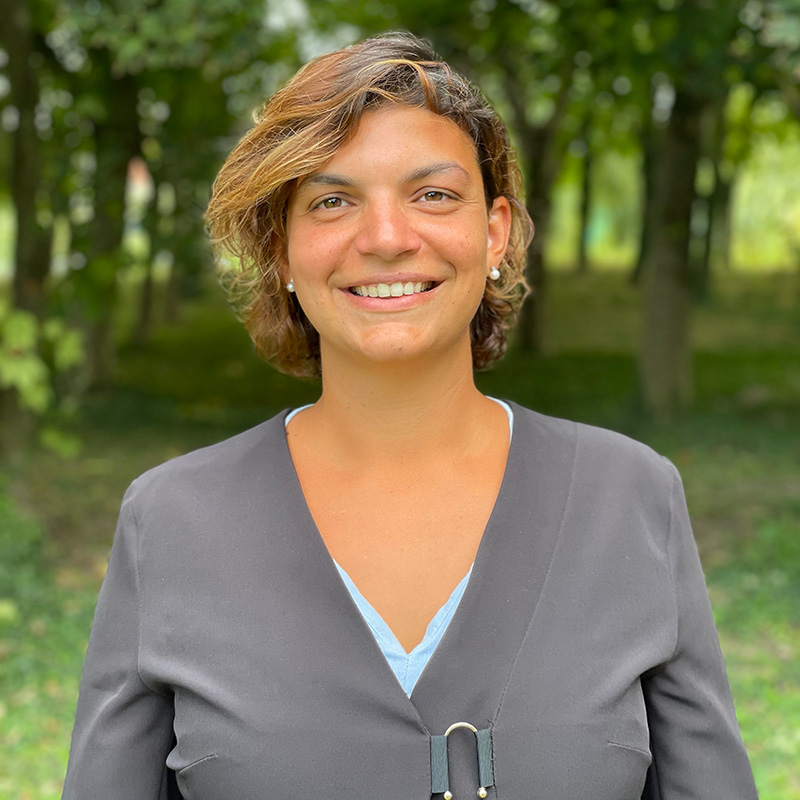
Camilla Sguotti (PI)
Camilla Sguotti is an Associate Professor of Ecology at the Department of Biology, University of Padua. Her research focuses on the temporal and spatial dynamics of marine populations and communities, with particular emphasis on non-linear changes and regime shifts. She uses advanced statistical approaches to understand how human pressures — such as fishing or climate change — affect the structure and resilience of marine ecosystems. A central part of her work is dedicated to quantifying ecological resilience, with the goal of predicting and anticipating potential future transitions.
Biography
After earning her degree in Marine Biology from the University of Padua (2014), she moved to Hamburg, Germany, where she spent six years completing her PhD and postdoctoral research, studying the impact of human pressures on marine populations and ecosystems. Her work focused on non-linear and non-stationary dynamics, as well as the study of regime shifts at both population and community levels.
In 2019, she earned her PhD at the University of Hamburg under the supervision of Prof. Christian Möllmann, as part of a Marie Curie Innovative Training Network.
After three years as a Postdoctoral researcher, in 2022 she returned to the University of Padua to join Prof. Alberto Barausse’s group, supported by a Marie Curie Individual Fellowship, with the goal of developing new methods to estimate the resilience of marine ecosystems.
In 2023, she was awarded an ERC Starting Grant for the FEEDRES project, and on February 1, 2025, she became an Associate Professor at the University of Padua.
Mathieu Pellissie - PostDoc
Mathieu Pèlissiè is a young researcher who joined the FEEDRES project as a Postdoctoral Fellow in May 2025.
After earning his degree in Biology, he quickly specialized in ecology, focusing in particular on the spatio-temporal dynamics of ecological systems in this era of global change. His research has ranged from insects to birds, before moving into the marine field during his PhD at the University of Montpellier in France. During his doctorate, he developed methods to identify and interpret drastic changes in the dynamics of ecological systems, with a particular focus on commercial fish populations at a global scale.
Within the FEEDRES project, he will work on reconstructing interaction networks within marine communities using a variety of statistical methods. By applying these methods across different temporal scales, he will also aim to identify structural changes in species interactions and understand how these are associated with the occurrence of regime dynamics.
He maintains a broad interest in ecology, ranging from taxonomy to citizen science, and is also highly committed to making research reproducible and accessible. As a result, he enjoys developing interactive tools and R packages related to the research he conducts!
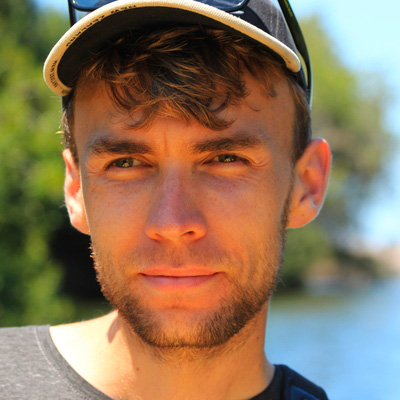

Lea Navarro-Broucksaux - PhD
Lea is a young researcher who joined the FEEDRES project in November 2025 as a PhD student.
She earned a Master’s degree in Marine Sciences from the University of Aix-Marseille (France), where she specialized in mathematical modeling of population dynamics and theoretical ecology.
During her master’s thesis internship, she focused on analyzing an ecosystem regime shift in the Mediterranean Sea, using deterministic models and time-series analysis.
Within the FEEDRES project, her goal is to identify the mechanisms underlying regime shifts and investigate the feedbacks that trigger or prevent these transitions at the population level in marine ecosystems. This work combines a systematic literature review, large-scale ecological data analysis, and the development of statistical models.