close
search menu

FEEDRES: Analysis of Regime shifts in Marine Ecosystems

FEEDRES (Feedback Mechanism Approach to Resolve Regime Shifts in Ecological Systems) is funded by the European Research Council (ERC) Starting Grant program (Call: ERC-2024-STG Grant Agreement n: 101163496 ).

The project aims to understand when, why, and especially how marine ecosystems can undergo drastic and sometimes irreversible changes due to external pressures such as climate change or human activities. To achieve this goal, FEEDRES combines knowledge from complex systems theory, marine ecology, and statistics, developing new tools to predict and address these critical changes.

Objectives, Actions, and Results

At the heart of the FEEDRES project are regime shifts: sudden, non-linear transformations that cause profound structural and functional changes in ecological systems, often irreversible. These shifts occur in response to external pressures on the system. Typical examples include desertification, ice melting, and the loss of coral reefs replaced by algal-dominated systems. In large and complex ecosystems such as the North Sea or the Mediterranean, such phenomena have been observed, yet understanding the mechanisms that drive them remains a major challenge. Even more difficult is predicting if and when these changes will occur in the future — a crucial aspect for the effective and sustainable management of marine environments.

FEEDRES focuses on studying the mechanisms that drive regime shifts in large marine ecosystems. The goal is to understand how the system functions during these transformations — to uncover when, how, and why they occur, and to project where they might happen in the future.

The project is structured around three main objectives

1

Mapping regime shifts

Map and classify regime shifts documented in the literature across different marine systems worldwide. This will allow to identify teleconnections, synchronous events, and potential gaps in knowledge.

2

Determining how marine systems function during regime shifts

Characterize the typical structural elements and connections of different marine systems, analyzing how they change during regime shifts.

3

Identifying the mechanisms of marine systems affected by human pressures

Identify the mechanisms that promote or hinder regime shifts, taking into account connections across different levels of organization, as well as spatial and temporal scales. This will allow adding a new level of complexity to the map developed in the first objective and projecting the potential occurrence of similar phenomena in other areas.

Department of Biology

A Center of Excellence in Research and Education

The Department of Biology (DiBio) at the University of Padua is a national and international reference point for the study of life sciences. Housed in the modern “Vallisneri” complex, the department is distinguished by a multidisciplinary approach spanning molecular and cellular biology, genetics, physiology, ecology, and evolution. This breadth is reflected in a strong educational offering, including undergraduate programs in Biology and Molecular Biology, as well as prestigious master’s programs such as Evolutionary Biology and Marine Biology, training the next generation of biologists with cutting-edge expertise.

Last news
News

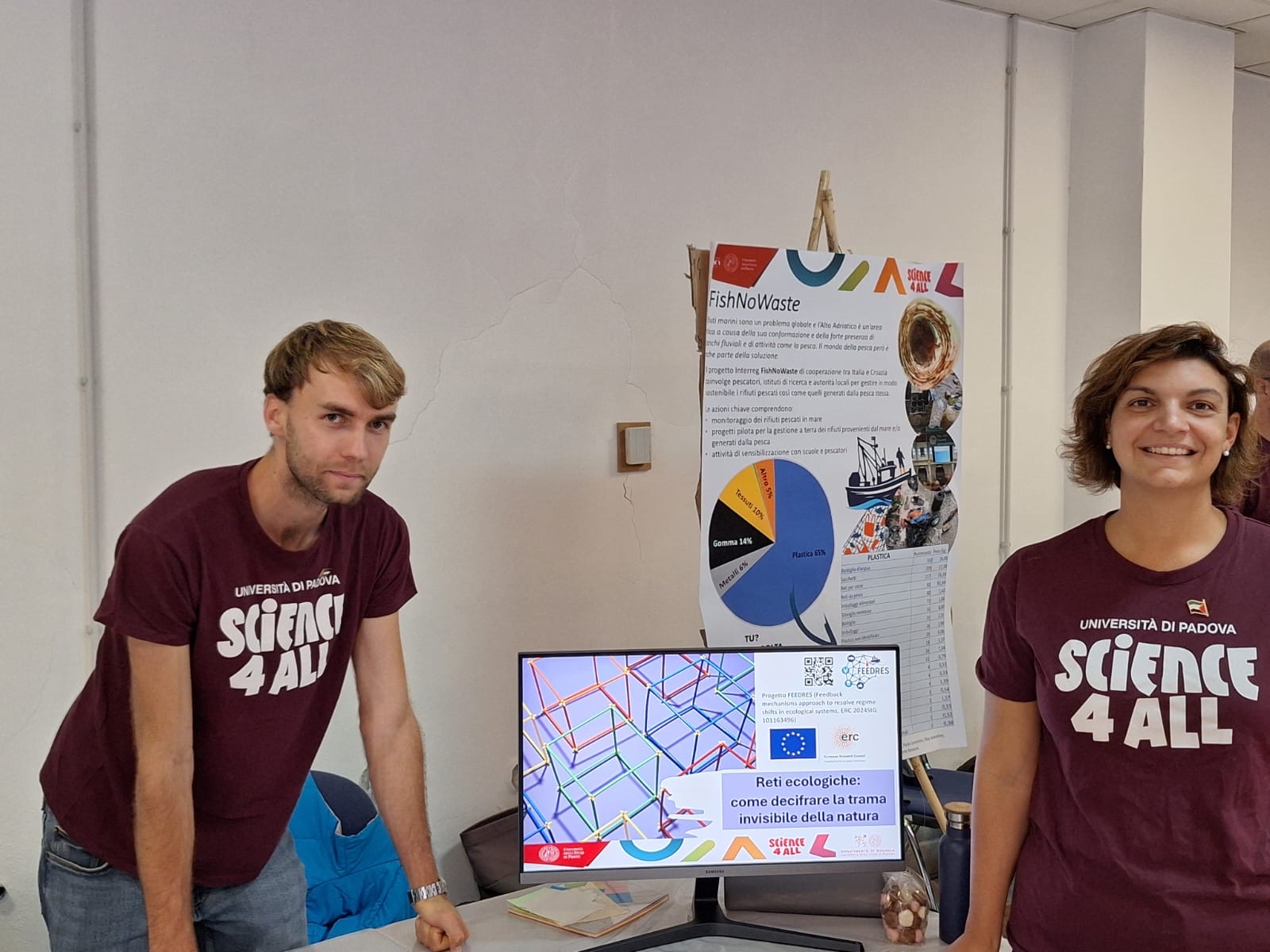
FEEDRES at Science for All!

On 27 September, the FEEDRES team took part in the wonderful Science 4 All initiative, an event dedicated to introducing the public to the research activities carried out at the University of Padua.

READ MORE
News

Ready, set… here we go!

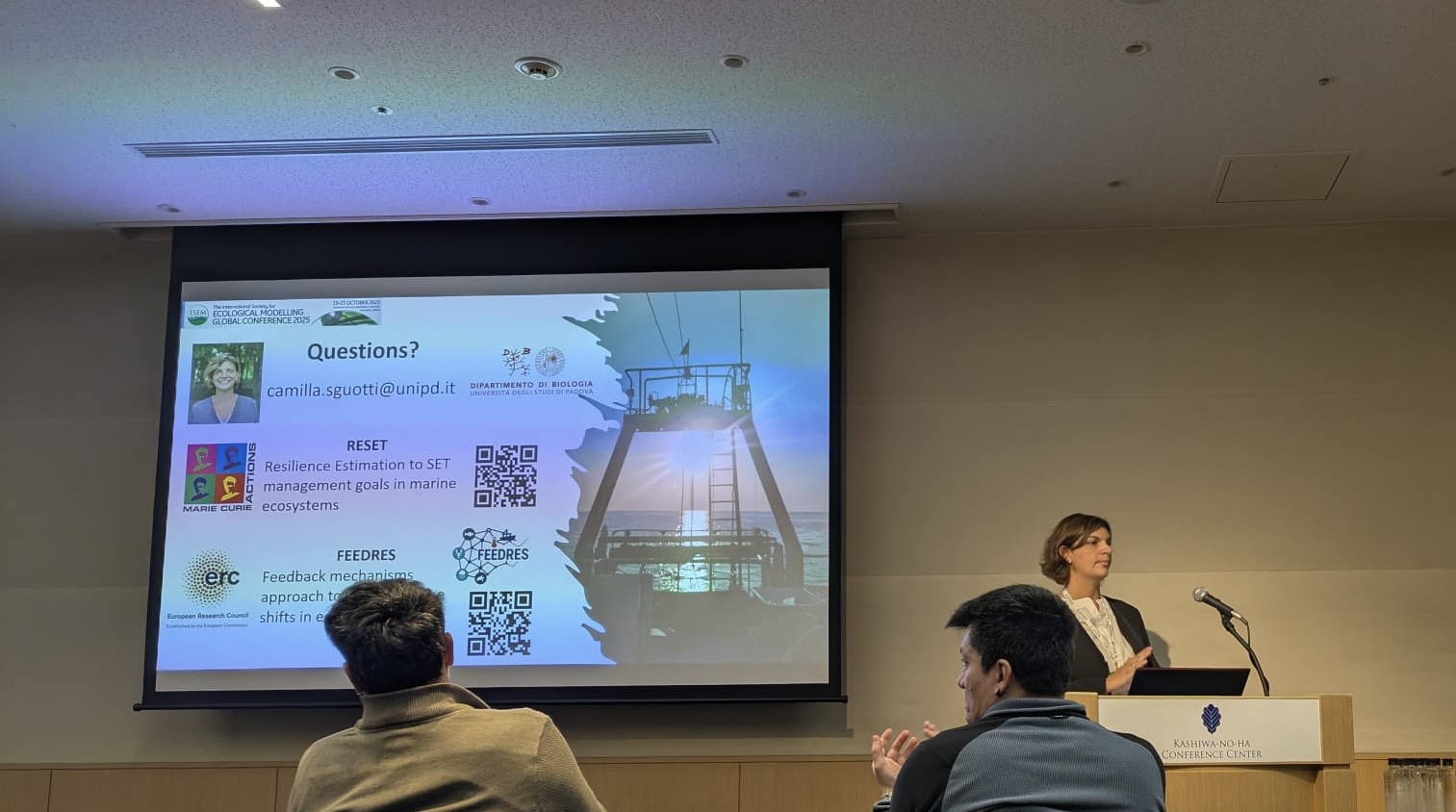
On 1 March, FEEDRES officially kicked off, a new ERC Starting Grant project that will lead us to uncover the mechanisms driving marine ecosystems towards profound and often irreversible changes.
READ MORE
The team
Camilla Sguotti

Camilla Sguotti is an Associate Professor of Ecology at the Department of Biology, University of Padua. Her research focuses on the temporal and spatial dynamics of marine populations and communities, with particular emphasis on non-linear changes and regime shifts.

Mathieu Pellissie

Mathieu Pèlissiè is an early career researcher who joined the FEEDRES project as a Postdoctoral Fellow in May 2025. After earning his degree in Biology, he quickly specialized in ecology, focusing in particular on the analysis of the spatio-temporal dynamics of ecological systems during this period of global change.

Funded by the European Union (ERC, FEEDRES,10116349). Views and opinions expressed are however those of the author(s) only and do not necessarily reflect those of the European Union or the European Research Council. Neither the European Union nor the granting authority can be held responsible for them.